

Your first time reading this series?
The series, A Million Fallen Petals, is a slow, attentive practice rather than a ranking or review. Each post pauses over a small handful of haiku or senryu that caught my eye on Bluesky— to notice how they work, where they open, and what they trust the reader to carry. The aim is to practise seeing: to linger with a few petals instead of trying to gather the whole tree, and to share what careful attention reveals.
Here’s this week’s fare:
A new poet this week, Rebecca Upjohn (rebeccaupjohn.bsky.social). Now, I have an English teacher's aversion to maths, so this required digging into some memories long since suppressed and a little research, but it was fulfilling.
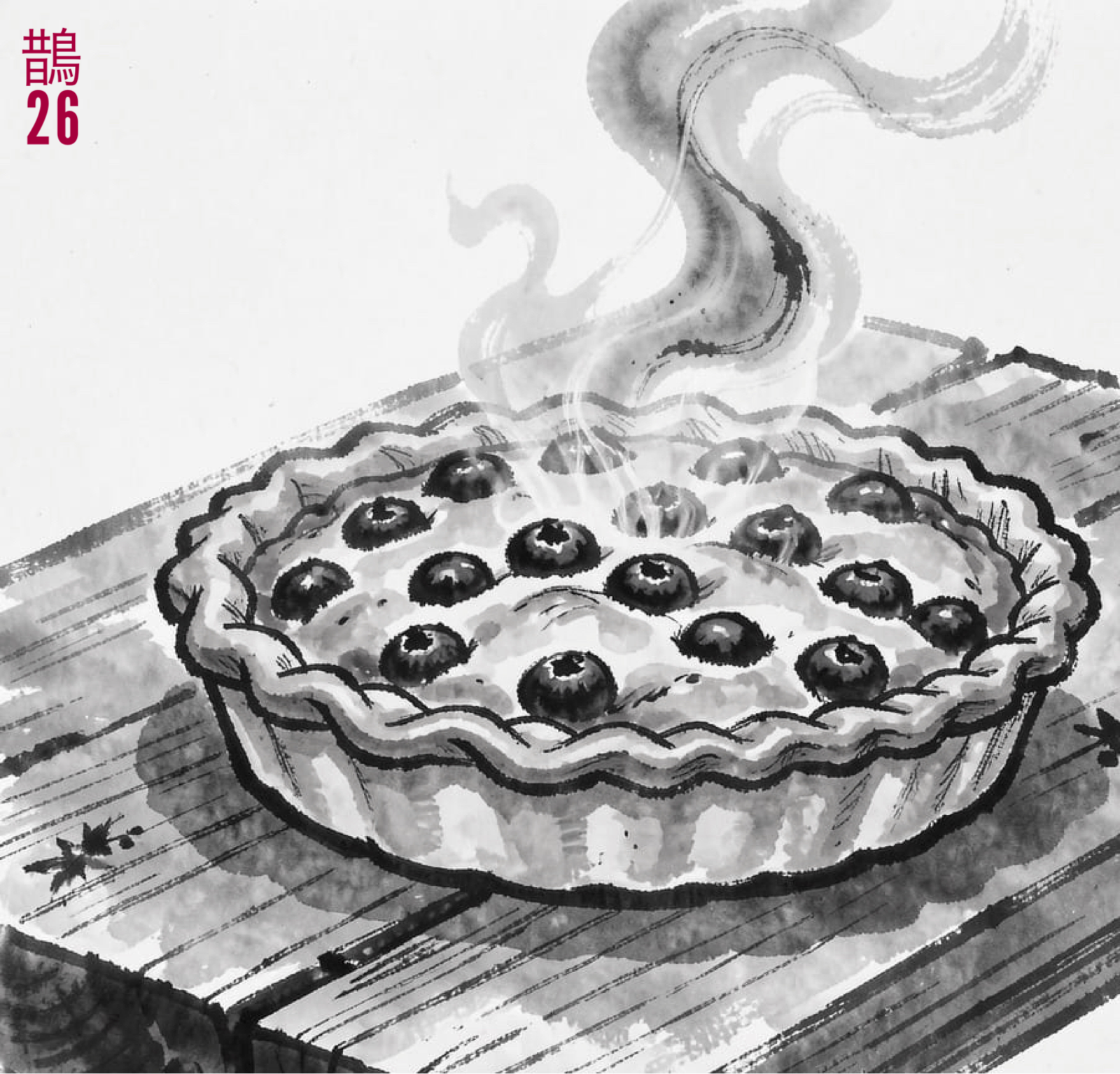
blueberry dreams
the constant of pi
in my stomach
This is an unusual, intellectually playful haiku that moves between sensory experience and abstraction. With the possibility of a π / pie pun, the poem gains a second layer that deepens both its humor and its structure.
“blueberry dreams” is evocative but deliberately soft-edged. It may suggest literal dreaming after eating blueberries, the deep indigo color of night, or the lingering sweetness of fruit. The phrase carries a dreamy, slightly surreal quality, supported by the gentle repetition of the b sound.
At the same time, the phrase quietly prepares the reader for a culinary association: blueberries naturally lead the mind toward blueberry pie, even though the poem never states it.
“the constant of pi / in my stomach” introduces a sudden shift from fruit and dreaming to mathematics and the body. At first glance, the phrase feels abstract — π as the irrational constant that defines the circle. Placing that concept “in my stomach” creates an odd, slightly comic tension between intellect and digestion.
However, if the reader hears pi as pie, the poem opens further. The line can be understood simultaneously in two ways:
π, the endless mathematical constant associated with circles
pie, the food that might logically follow blueberries
This ambiguity is elegant because the poem never signals the pun explicitly. The discovery happens through sound rather than explanation.
The pun creates a subtle circular logic within the poem:
blueberries suggest blueberry pie
pie is circular
π mathematically describes circles
In this way, the poem loops back on itself conceptually, which is fitting given the nature of π as an infinite, repeating number.
The poem therefore moves between several registers at once:
sensory pleasure (berries and dessert)
intellectual abstraction (π)
bodily experience (something sitting in the stomach)
This layering gives the poem a lightly mischievous tone. It feels closer to senryu or experimental haiku, where wit and conceptual play are welcome alongside image.
The soft consonants of “blueberry dreams” contrast with the crisp precision of “constant of pi.” The final phrase, “in my stomach,” returns the poem to physicality, grounding the abstraction in the body.
Without recognizing the π / pie echo, the poem may feel overly conceptual. The humor and cohesion depend on that phonetic connection being heard. For readers who catch it, however, the poem becomes much more satisfying.
A quirky, imaginative poem that blends fruit, dreaming, mathematics, and digestion into a small conceptual loop. If the π / pie wordplay is intentional, the poem gains a clever circular structure: blueberries lead to pie, pie suggests π, and π returns us to the idea of circles — all ending in the human stomach. The result is playful, slightly surreal, and intellectually light-footed.
Next a poem from a regular, Thomas:
This is a compact, sensory haiku that captures a small human moment within a winter setting. Its strength lies in how a subtle sound reveals both atmosphere and physical presence.
“winter bus—” immediately situates the reader in a specific seasonal context. The phrase evokes cold air, bundled passengers, fogged windows, and the subdued mood of winter travel. The dash creates a pause that allows the scene to settle before the action appears. The setting feels ordinary but complete — a public space where strangers briefly share warmth.
“the last seat / sighs under me” brings the moment into sharp focus. The poem captures the sound and sensation of a bus seat compressing as someone sits down. The word “sighs” personifies the seat just enough to make the sound vivid without becoming overly decorative. That personification works well: the seat seems to exhale, as though relieved or weary.
The poem subtly pairs two forms of winter fatigue:
the long, quiet atmosphere of winter travel
the soft sigh of the seat taking a passenger’s weight
The moment may also imply that the bus is nearly full, adding a faint sense of end-of-day exhaustion or crowded warmth.
“Sighs” is an excellent choice. It carries both sound and mood — a gentle exhalation that mirrors the heaviness of winter. The soft consonants of “seat sighs” create an audible hush, reinforcing the subdued setting.
The poem stays entirely within physical experience: a bus, a seat, a sound. It doesn’t explain who the speaker is or why they are traveling. This restraint allows the reader to inhabit the moment directly.
The focus on such a small sensory detail reflects a classic haiku strength — noticing the unnoticed. One extra possible nuance—“Last seat” might be read in two ways:
the final empty seat available
the seat at the back of the bus
Both readings work and add quiet texture to the scene.
Overall it’s a well-observed haiku that finds a moment of life in the smallest sound. The sighing seat captures the weight of a passenger and the quiet fatigue of winter travel. Simple, precise, and gently human.
Next, Herb Tate is back and for some reason I have a hankering for some Japanese whiskey.
This is a mood-driven poem that leans into atmosphere and perception rather than concrete image. Its strength lies in how sound alters the experience of time.
“sax solo —” is an evocative first line. It immediately places us in a sonic environment — likely a bar, club, or late-night setting. The dash works well as a cut, letting the note hang in the air before the perception arrives. The phrase carries emotional color: saxophone suggests warmth, melancholy, improvisation, and intimacy.
“the way the evening / just got longer” shifts from sound to subjective experience. Time dilates under the influence of music. This is the poem’s central insight:
the solo doesn’t literally lengthen the evening
but it deepens it, stretches it, makes it linger
The phrasing “the way” suggests a moment of realization — the speaker noticing the shift as it happens.
The tone is reflective, slightly wistful. There’s pleasure in the elongation, but also a hint of loneliness or suspension — as if the speaker is caught in the music’s spell. The word “just” is important: it marks immediacy. The change in perception happens right now.
Unlike more image-driven haiku, this poem is largely abstract. We are told about the effect (“evening… got longer”) rather than shown a concrete detail that implies it. Contemporary haiku often favors sensory anchoring — a glass sweating, smoke curling, a note hanging — to embody the feeling.
That said, the poem succeeds as a moment of perception rather than a visual snapshot.
The long vowels in “solo,” “way,” and “longer” create a drawn-out, lingering rhythm that mirrors the stretching of time. The pacing itself enacts the poem’s idea.
A subtle, perceptual haiku about how music reshapes time. While it leans toward abstraction, it captures a recognizable experience: the way a saxophone solo can hold a moment open and make the night feel as though it won’t end. Quiet, reflective, and gently immersive.
Following that, cast your eye around for some flat stones with Jenn
This is a lively, idea-rich haiku that links human play with natural transformation. Its effectiveness lies in the parallel it sets up, though that same cleverness slightly pushes it away from pure observation.
“pond skipping” (read as stone-skipping) evokes a warm-season setting — late spring or summer — with children at the water’s edge. The phrase carries movement, light, and a sense of play. It’s an active, human-centered opening that sets the scene dynamically.
“the tadpoles find / their legs” introduces a natural process: metamorphosis. The juxtaposition suggests a connection:
stones skipping across the pond
tadpoles transitioning into frogs
Both involve motion and change, but more importantly, the poem invites a conceptual echo:
the human act of “skipping”
the tadpoles gaining the ability to leap
This creates a neat, almost symmetrical relationship between the two parts.
The poem leans toward conceptual linkage rather than a single observed moment. It’s unlikely that the speaker literally sees tadpoles growing legs at the same instant as skipping stones. Instead, the poem overlays two processes to create meaning.
This gives the haiku a slightly crafted, thoughtful quality, rather than a purely immediate one.
“find their legs” is effective. It suggests discovery rather than biological inevitability, which aligns nicely with the playful tone of “pond skipping.” It also echoes human language (finding one’s feet), subtly bridging human and animal worlds.
There’s a lightness in the phrasing:
“pond skipping” (quick, kinetic)
“tadpoles find” (soft, flowing)
The rhythm supports the sense of movement and emergence.
The tone is gently celebratory. There’s a sense of growth, transition, and perhaps childhood — both in the implied stone-skipper and in the young amphibians.
Overall an engaging haiku that draws a clever parallel between human play and natural metamorphosis. While it leans toward idea-driven juxtaposition rather than strict shasei, it remains light, readable, and thematically cohesive — a small meditation on movement, growth, and the beginnings of leaping into the world.
And finally, you have permission to let your hair down with Shinobazu Pond:
This haiku is compact and playful, balancing simple observation with a potential pun that enriches its meaning. The effectiveness lies in how it conveys movement, openness, and a hint of wordplay in just three lines.
“Given” immediately sets a tone of generosity or permission. It is spare, almost a prelude, suggesting that what follows is a gift or an opportunity. This economy of language primes the reader to notice the next image.
“free rain / running puddles” moves quickly from abstract to concrete. The rain is described as “free,” which could imply both natural rainfall and liberation. The running puddles echo the rain’s movement, making the scene kinetic. The action is visual, tactile, and immediate.
If we read “rain” as a homophone of “rein,” the haiku gains an additional, metaphorical layer: the idea of release, unbridled motion, or relinquishing control. Rain no longer just falls; it is “given free,” like reins loosened on a horse. This pun works subtly with the movement in the image: the puddles “running” reinforce the sense of freedom.
The three short lines mirror the gentle descent of rain. The repeated r in “rain / running” gives the haiku a soft, rolling texture, echoing the motion of water. The simplicity of “Given” as the first line creates a quiet beat before the rolling r sounds take over.
The haiku captures a small, perceptual moment — noticing both the physical presence of water and its metaphorical suggestion of freedom. The pun, if noticed, adds a witty or slightly philosophical dimension without overwhelming the imagery.
The haiku is strongest if the reader catches the rain/rein pun, but even without it, the image works as a short meditation on motion and permission.
A concise, perceptive haiku that combines natural observation with conceptual play. The potential pun enriches the reading, linking literal rain to the idea of freedom or loosened control, while the running puddles keep the poem grounded in sensory perception. Simple, kinetic, and subtly witty.
This post was compiled to the music of Ryiuchi Sakamoto’s, Rain On The Open Strings.
Your thoughts?
Other places you can find me:
This Substack is for Haiku—and other Japanese inspired short form poetry—commentary.
If you are looking for Haiku and Haibun written by me I host them on Magpie Song.
I also recently started writing a column for The Solitary Daisy haiku newsletter.
If you are looking for poetry written in the Western tradition you can check out my old blog at Words Poetical.
I am also an amateur practical philosopher in the Stoic tradition and my writings can be found at Seeds of Virtue.
I can be found on social media at Bluesky under the handle @sbwrightpoet.bsky.social
From the puddle that the tank has dripped
hens peck glimmerings and uptilt
their heads to shape the quickness down;
petunias live on what gets spilt.
-Les Murray